Divorce insomnia is hormonal, not mental. Here's why you can't sleep after divorce and one specific protocol that works tonight — no wellness advice.
Divorce triggers a sustained cortisol and adrenaline response that keeps the nervous system in threat-detection mode at night. The brain is scanning for danger that no longer has a physical target, which produces racing thoughts, early waking, and inability to fall back asleep. Interrupting that hormonal loop with specific pre-sleep protocols — not general sleep hygiene advice — is what breaks the pattern.
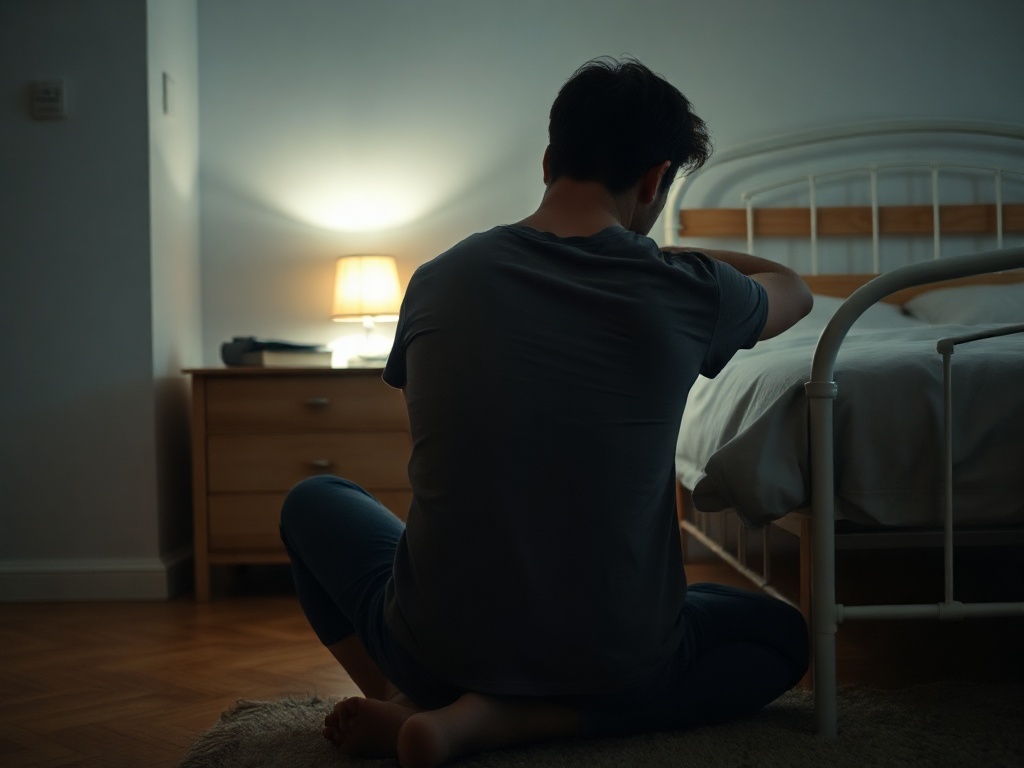
It is 2:47am. You are fully awake, sitting on the edge of a bed that feels like a stranger's. Your chest is tight. Your mind is already running numbers — the custody schedule, the attorney's last email, the look on her face when she said it was over. You are not anxious in a clinical sense. You are not weak. Your body is doing exactly what it was built to do when a threat appears: it is staying alert, scanning, ready. The problem is that the threat has no address, and your nervous system does not know that. It will keep doing this until something tells it the danger has passed. That something does not come on its own. You have to produce it deliberately.
What causes sleep problems during and after divorce?
The mechanism is hormonal, not psychological. When a marriage ends, the brain registers it as a primary attachment rupture — the kind of threat that in ancestral terms meant social exile, loss of resources, and physical vulnerability. The hypothalamic-pituitary-adrenal axis responds by elevating cortisol and triggering the autonomic threat response. This is not a metaphor. Cortisol has a measurable diurnal curve, and under chronic stress that curve flattens — meaning it stays elevated at night when it should be at its lowest point, the window when sleep onset and deep sleep are supposed to occur.
Divorce insomnia is not a mindset problem — it is a hormonal one. Elevated cortisol after a major life rupture physically prevents the body from downshifting into sleep-onset state. You can want sleep badly. You can be exhausted beyond articulation. None of that overrides the biochemical signal that says stay up, stay ready, something is wrong.
Compounding this is the adrenaline component. The autonomic nervous system runs two modes: sympathetic, which is threat response — elevated heart rate, dilated pupils, sharpened attention — and parasympathetic, which is recovery mode. Sleep requires a hard shift into parasympathetic dominance. After divorce, the sympathetic system has been running hot for weeks or months. It does not simply switch off because the lights are out. The intrusive thought loops that hit you hardest at midnight are not random. They are the sympathetic system doing its job, which is to keep you rehearsing threats so you can survive them. The problem is you cannot fight or flee a legal filing.
Sleep architecture disruption adds another layer. Normal sleep cycles through light sleep, deep slow-wave sleep, and REM in roughly 90-minute blocks. Cortisol elevation fragments these cycles — you drop into light sleep, then surface, then cannot go back under. The result is the specific pattern most divorced men describe: falling asleep from sheer exhaustion, then snapping awake between 2am and 4am as if someone threw a switch, then lying there with a brain that runs at full speed for two hours before fitful half-sleep takes over just before the alarm.
Is it normal to wake up at 3am every night after separation?
Yes. And the specificity of that window matters. Men going through divorce report early-morning waking — typically between 2am and 4am — as the most common sleep symptom. This is consistent with an activated stress-response system, not anxiety in the clinical sense. Here is why that window is significant: cortisol naturally begins rising around 3am to prepare the body for waking. Under normal conditions, this rise is gradual and does not pull you out of sleep until closer to 6am or 7am. Under elevated baseline cortisol — which is what divorce produces — that early-morning spike hits harder and earlier, and because your system is already primed toward threat detection, it is enough to snap you fully awake.
This is not insomnia in the way most people use the word. It is acute stress insomnia driven by a specific hormonal pattern. Which means it responds to specific interventions, not to the generic advice about screens and chamomile tea that was written for people who stay up too late watching television.
How long does insomnia last after divorce?
This is the question most men ask at 3am, and the honest answer is: it depends almost entirely on what you do with it. Left unaddressed, sleep disruption driven by chronic cortisol elevation can persist for months. The acute phase — the worst of it, the lying awake until dawn — typically concentrates in the first three to six months post-separation. But the plateau that follows, where sleep is technically happening but never feels restorative, can stretch much longer if the hormonal pattern is not interrupted.
There is also a compounding effect that men rarely account for. Sleep loss during divorce compounds every downstream problem: legal judgment, financial decisions, emotional regulation, and physical health all degrade in proportion to how many consecutive nights of disrupted sleep accumulate. A man making custody decisions or asset negotiations on four hours of fragmented sleep for six weeks straight is not operating at anything close to his actual capacity. The decisions he makes in that state will outlast the sleep deprivation by years. This is why fixing the sleep is not a comfort issue — it is a strategic one. The next decade of your life is partially being written right now, and it is being written by a man who cannot think straight.
The good news: the acute stress insomnia pattern responds faster than chronic insomnia does when you address it at the right level. You are not dealing with a broken sleep system. You are dealing with a stress-response system that is overclocked. Target the mechanism and the sleep can stabilize in days, not months.
Can sleep deprivation affect divorce legal decisions and judgment?
More than almost any other factor you can control. Sleep-deprived judgment is not just slower — it is systematically biased in specific ways that are dangerous during divorce proceedings. The prefrontal cortex, which handles risk assessment, impulse control, long-range planning, and the ability to hold multiple variables in mind simultaneously, is disproportionately impaired by sleep loss. What remains more intact is the amygdala — the threat and emotion processing center. So what you get after chronic disrupted sleep is a man who is more reactive, more prone to worst-case thinking, less able to evaluate trade-offs, and more likely to make decisions based on how he feels in the moment rather than what the actual long-term calculus says.
In the context of a divorce, that combination is expensive. It means you may accept terms you would reject at full capacity. It means you may say things to your attorney, your ex, or in front of a mediator that a rested version of you would never say. Decision fatigue compounded by sleep loss creates a specific vulnerability: toward the end of any negotiation session, a sleep-deprived man tends to capitulate not because the terms are right but because he cannot sustain the cognitive load of holding firm. The other side does not need to know your legal position — they just need to outlast your ability to think.
This is not about mental toughness. This is neurochemistry. A rested man and a sleep-deprived man facing the same legal question are not the same man. Fix the sleep. Then make the decisions.
What actually works for insomnia caused by divorce stress?
Generic sleep hygiene advice fails divorced men because it does not address the specific cortisol and adrenaline patterns that divorce produces. The intervention has to target the hormonal mechanism, not the bedroom environment. Telling a man in acute stress insomnia to dim his lights at 9pm and avoid caffeine is like telling someone with a broken leg to walk it off. The structural problem is not being addressed.
What actually works operates at three levels: interrupting the sympathetic activation before bed, dampening the cortisol response in the 2am to 4am window, and rebuilding sleep pressure during the day to force the system into deeper cycles at night.
Interrupting sympathetic activation before bed. The nervous system needs a clear physiological signal that the threat-scanning mode can stand down. This does not come from relaxation as most people understand it. It comes from deliberate physiological downregulation. The specific mechanism that works: extended exhale breathing, not as a mindfulness exercise, but as a direct vagus nerve stimulus. The exhale phase of breathing activates the parasympathetic branch of the autonomic nervous system. A 4-second inhale followed by an 8-second exhale, repeated for five minutes, produces measurable heart rate variability changes that shift the autonomic balance toward parasympathetic dominance. This is not optional wellness advice. It is hardware-level intervention on the system that is keeping you awake. Do it lying in bed before attempting sleep. Do it again if you wake at 3am before you allow your mind to engage with any content.
Cortisol management in the early morning window. The 3am waking is the cortisol spike arriving early. Two things help disrupt it. First, magnesium glycinate taken 30 to 45 minutes before bed has a demonstrated effect on cortisol modulation and GABA receptor activity — both directly relevant to the sleep-disruption mechanism in stress insomnia. This is not a supplement pitch. It is the one supplement with the most direct mechanistic relevance to what is actually happening in your body. Second, if you wake at 3am, do not lie there running the tape. Get up, go to another room, sit in low light, do the breathing protocol for ten minutes, then return to bed. Lying awake in the dark for two hours trains your brain to associate the bed with vigilance. Breaking that association is not optional — it is how you stop the pattern from becoming chronic.
Rebuilding sleep pressure during the day. Sleep pressure — the biological drive to sleep — accumulates through adenosine buildup during waking hours. Fragmented sleep and late-morning staying-in-bed behaviors reduce the effective sleep pressure that arrives the next night. Get up at the same time every morning regardless of how bad the night was. This is the single most evidence-supported behavioral intervention in sleep medicine. It is also the hardest one to do when you are exhausted and have nowhere to be. Do it anyway. The sleep pressure you build by staying awake through a hard morning will make the following night's sleep meaningfully deeper. Exercise — specifically resistance training or hard cardiovascular work in the morning or early afternoon — accelerates adenosine buildup and has a secondary cortisol-regulating effect that matters for the nighttime pattern. You do not need a gym. You need to physically exhaust the system that is running too hot.
What to do tonight specifically. Not tomorrow. Tonight. Thirty minutes before you want to be asleep, stop engaging with anything related to the divorce — phone, email, documents, conversations. Lie down. Do the extended exhale breathing: inhale four counts, exhale eight counts, for five minutes without stopping. Take 400mg of magnesium glycinate if you have it — if you do not, it is available at any pharmacy and costs less than ten dollars. If you wake at 3am, do not check your phone. Get up, sit somewhere other than your bed, do the breathing protocol again for ten minutes, then go back. That is the protocol. One night of doing it will not eliminate the problem. But it will produce a result that nothing passive produces: evidence that you can interrupt the pattern. That evidence matters because one of the things keeping you awake is the belief that nothing works.